
New Research Finds Strategic Advantages Make Platform Models Hard to Replace
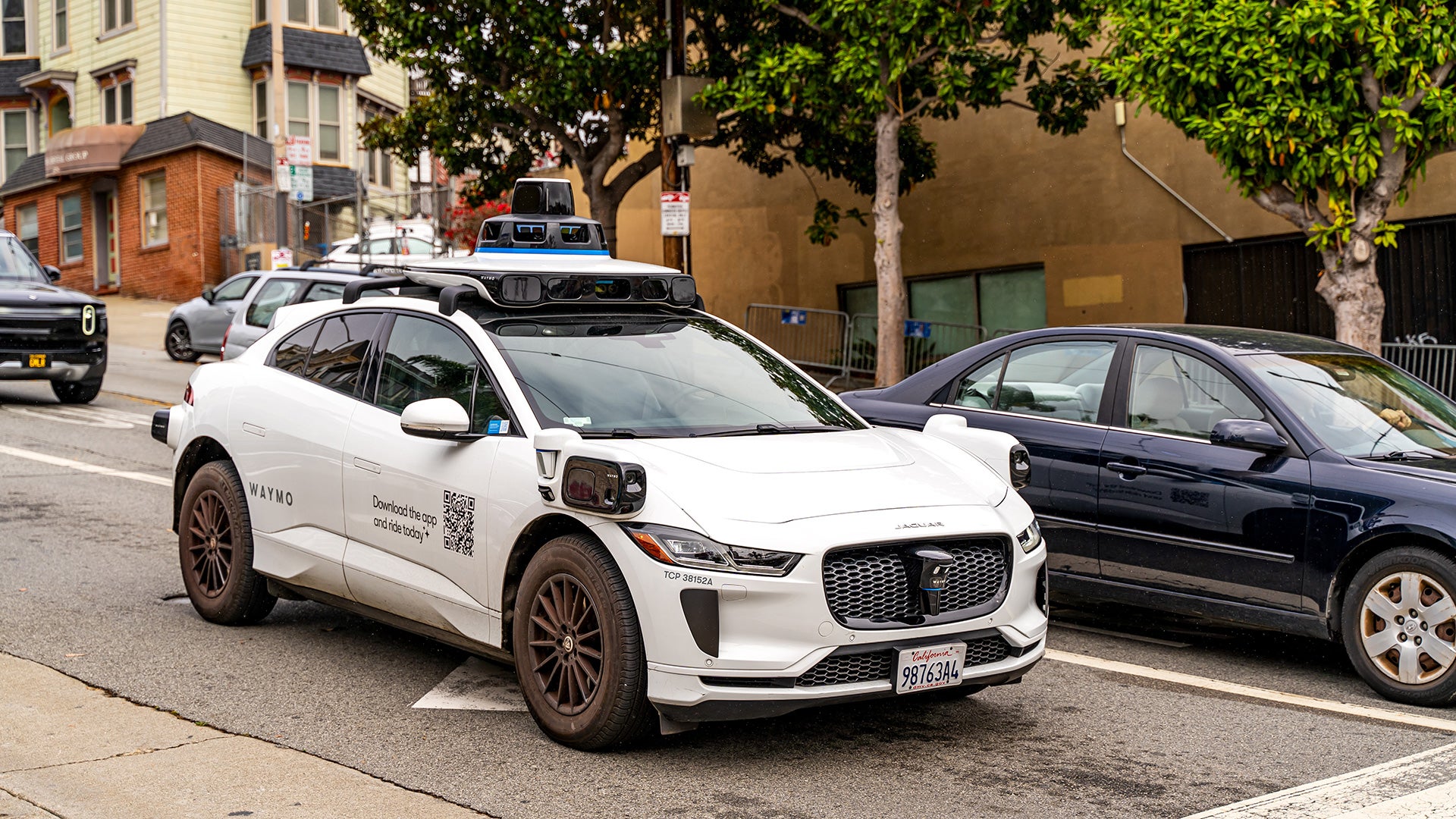
The ride-hailing industry has been rife with disruption since Uber drove onto the scene in 2010, displacing traditional taxi services and becoming the world’s most valuable startup in 2015. Now AI giants and investors are banking on the future of fully autonomous vehicle services, like Waymo, which is gearing up for a Washington, D.C., rollout this year. Test cars are already cruising the streets in the nation’s capital, but new research from the University of Maryland’s Robert H. Smith School of Business finds good reasons to hit the brakes. Options like Uber and Lyft are still attractive for both investors and passengers, at least for now.
Tunay Tunca, Dean's Professor of Management Science and Operations Management, and Yi Xu, professor of operations management, together with Daehoon Noh, PhD ’21, compared services like Uber in the United States and ApolloGo in China to AI-powered driverless robotaxi services like Waymo. The difference between the two types comes down to business model: Uber and Lyft are platform businesses. They use technology to connect drivers with people who need rides, taking a cut of each fare. In contrast, Waymo has a vertically integrated business model, where the company — of Google’s parent Alphabet — engineers, owns and operates all the cars.
Tunca and Xu find that the platform model is often the winner. They find that unless robotaxi firms have very significant cost savings over ride-service platforms — which they don’t yet, and robotaxi rides currently usually cost more — the platform business model has better revenue potential and significant strategic advantages.
Investors should take note, Xu says, because this research shows how platforms might significantly restrict the profitability of robotaxis and other technology-based platform alternatives. “Uber’s stock drops sharply when people say that it will be replaced by robots, but in practice, people are not sure how this new technology will impact existing business models. Our study contributes to this debate in a more rigorous way.”
Regulators that are trying to subsidize or encourage the entry of autonomous vehicles need to fully understand the implications, says Tunca.
“It’s not clear that it’s going to benefit society,” he says. “In a lot of cases, we show that congestion increases. Customers end up waiting longer for a ride.”
Tunca says the conventional beliefs about competition — where having more options in a market usually benefits consumers — don’t apply here.
Tunca explains that when a company like Waymo enters a market, they may set low ride prices to entice riders. Then Uber and Lyft have to match or undercut those prices to be competitive. The low prices make more people want to use ride services instead of other transportation options.
“There are many more customers in the market, so the wait times increase,” Tunca says. “In the end, customers are getting lower prices, but they suffer higher wait times.”
Plus, in that scenario, Uber and Waymo both suffer because their profits are a lot lower.
The Advantages of Agility and a Better Profit Model
Tunca and Xu say the strategic advantages of the platform model come from two main sources: agility and the robustness of their profit model.
Platforms like Uber can adjust their supply quickly by changing the percentage of commission they take from each ride, says Tunca.
“If they give more of the revenue to the drivers, there will be more drivers on the streets. If they take a lot of that revenue, then there will be fewer drivers.”
Tunca compares that to a robotaxi service: “If they want to scale up, they have to invest a lot of money and acquire a lot of cars.”
Platforms also have the profit model advantage, says Xu. Because they don’t own or maintain cars and just provide technology, they don’t have to make big investments to increase supply. Lowering ride prices to aggressively compete might reduce revenues, but it doesn’t result in huge losses.
But robotaxi companies cannot do that, says Tunca. “They risk making large losses because they invested hard cash into building their capacity.”
He points to a cautionary tale: the GM Cruise robotaxi business. Ultimately, GM pulled out of that market because their costs piled with non-reversible R&D and capacity investments, while having technical and regulatory issues.
Broader implications
The research offers important insights for all sharing economy platform businesses — “It’s not only about ride-hailing,” Xu says. Other examples include Airbnb for accommodation rentals and TaskRabbit for help with chores.
“The general overarching theme here is the resilience of the platform model,” Tunca says. “It has some strategic advantages that make them very difficult to eliminate or replace in the market.”
Tunca and Xu say their research findings may also help with easing fears that AI-driven technologies will completely replace human-based technologies. Xu says the research underscores the need to embrace new technology the right way. And humans will still have a big role to play.
“Our study basically showed — and it’s a surprise to us — that this may not happen in a straight line. So many subtle factors will play out in the market-and human-based technologies such as the Uber-type platforms are likely to survive.”
“The resilience of the platform model gives it the advantage for now,” says Tunca. “There could be models in the future that we don’t even know about yet. But our paper says it may be not very easy for AI to replace humans in the work marketplace.”
Read the research, “Evolution of Ride Services: From Ride- Hailing to Autonomous Vehicles,” forthcoming in Management Science.
Media Contact
Greg Muraski
Media Relations Manager
301-405-5283
301-892-0973 Mobile
gmuraski@umd.edu
Get Smith Brain Trust Delivered To Your Inbox Every Week
Business moves fast in the 21st century. Stay one step ahead with bite-sized business insights from the Smith School's world-class faculty.