
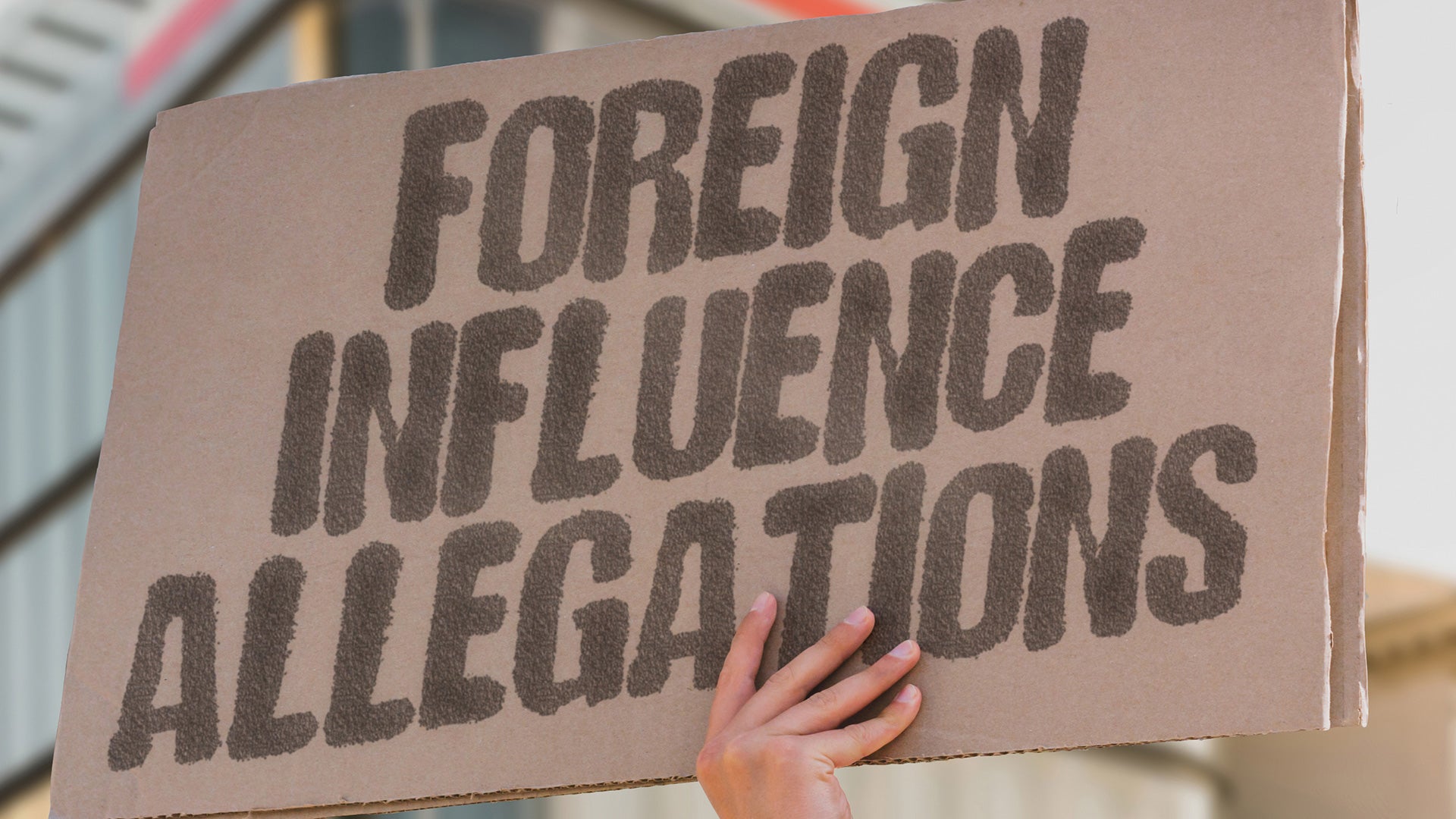
A new study published in Organization Science reveals that U.S. Department of Justice (DOJ) charges against Paul Manafort in 2018 triggered a significant increase in compliance with the Foreign Agents Registration Act (FARA), demonstrating how targeting high-profile figures can deter misconduct across an industry.
Assistant Professor of Management and Organization Reuben Hurst at the University of Maryland’s Robert H. Smith School of Business, with co-authors Jin Hyung Kim (George Washington University) and Jordan Siegel (University of Michigan) analyzed FARA filings from 2014 to 2022.
Using a difference-in-differences approach, they found that in the four years following
Manafort's indictment for undisclosed lobbying on behalf of pro-Russian Ukrainian interests, the annual dollar value of reported lobbying for foreign governments in the U.S. rose by 56%. The number of reported clients, amendments and overall disclosures also increased markedly.
Prior to the Manafort case, many lobbyists avoided FARA registrations when representing clients from autocratic or corrupt regimes to manage reputational risks. However, the DOJ over the past 10 months has indicated an intention to relax FARA enforcement.
A move to lighten FARA enforcement means “lobbyists likely will scale back their reporting practices—decreasing journalists', regulators', and the public's ability to scrutinize actions by foreign governments here in the United States,” Hurst says. “From the perspective of accountability and transparency, this is a clear step backwards.”
The paper uses the case of enforcement against Manafort to introduce the concept of "status amplified deterrence," where accountability for prominent individuals amplifies regulatory effects industry-wide.
Hurst says his team’s study has important implications for how regulatory agencies can efficiently increase white-collar compliance. Rather than resource-intensive "flooding the zone" approaches, strategic enforcement against high-status actors may be a more cost-effective deterrence strategy.
Read “Status-Amplified Deterrence: Paul Manafort’s Prosecution Under the Foreign Agents Registration Act” at Organization Science.
Media Contact
Greg Muraski
Media Relations Manager
301-405-5283
301-892-0973 Mobile
gmuraski@umd.edu
Get Smith Brain Trust Delivered To Your Inbox Every Week
Business moves fast in the 21st century. Stay one step ahead with bite-sized business insights from the Smith School's world-class faculty.