
 The onset of COVID-19 upended economies worldwide. In the U.S., employment fell by a combined 21.7 million between January and April 2020.
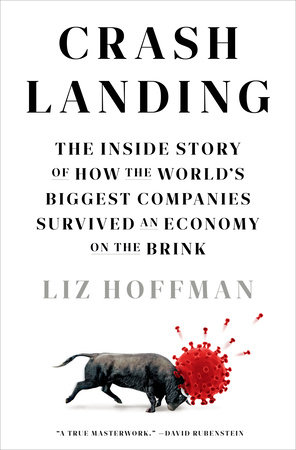
Iconic firms, meanwhile, were begging for bailouts, and countless small businesses were in freefall — as described by award-winning business journalist Liz Hoffman in her new book, “Crash Landing: The Inside Story of How the World's Biggest Companies Survived an Economy on the Brink.”
At the time, Dean’s Professor of Finance Michael Faulkender at the University of Maryland’s Robert H. Smith School of Business was negotiating critical relief through the CARES Act in his role as Chief Economist and Assistant Secretary for Economic Policy for the U.S. Department of Treasury.
The legislation resulted in Faulkender implementing the Payment Protection Program (PPP), subsequently referenced by a Fed economist as “a very large and very timely fiscal-policy intervention, saving about 3 million jobs at its peak in the second quarter of 2020 and distributing $800 billion well within two years of the onset of the COVID-19 crisis.” Faulkender’s own research, with two of his former Treasury colleagues, estimates the job savings were closer to 14 million.
Hoffman’s book (which according to the executive producer of Showtime’s Billions “reads like a suspense thriller because that’s what it is, even though every word is true”) depicts Faulkender’s effort in a pivotal scene:
Despite the rapidly growing alarm about the economic effects of the coronavirus, a trillion-dollar program just seemed wildly high, even if Rubio and Cardin felt they had enough support in Congress for it. It had fallen to Faulkender to go walk them through the math. The Capitol, closed to visitors and nonessential personnel, was a ghost town. Faulkender was met by a staffer and escorted to a hearing room, where Rubio and Cardin, along with Jeanne Shaheen, a Democrat from New Hampshire, and Susan Collins, a Republican from Maine, were fanned out, socially distanced, around the dais. It just wasn’t going to work, Faulkender told them. Cardin called him a “bean-counter.” Faulkender would later tell friends it was one of his proudest moments.
Hoffman, a business and finance editor at Semafor and former Wall Street Journal senior reporter, recently discussed the book via the likes of MSNBC and CBS News.
Media Contact
Greg Muraski
Media Relations Manager
301-405-5283
301-892-0973 Mobile
gmuraski@umd.edu
About the University of Maryland's Robert H. Smith School of Business
The Robert H. Smith School of Business is an internationally recognized leader in business education and cutting-edge research. The school’s world-class faculty facilitate experiential learning opportunities rooted in the real world. Smith students learn to think like entrepreneurs, prepared to drive positive impact. The school offers undergraduate, online and on-campus business master's, full-time, part-time, online and executive MBA, plus PhD and DBA degree programs, and non-degree and executive education programs. Where Smith leads, the future follows.