
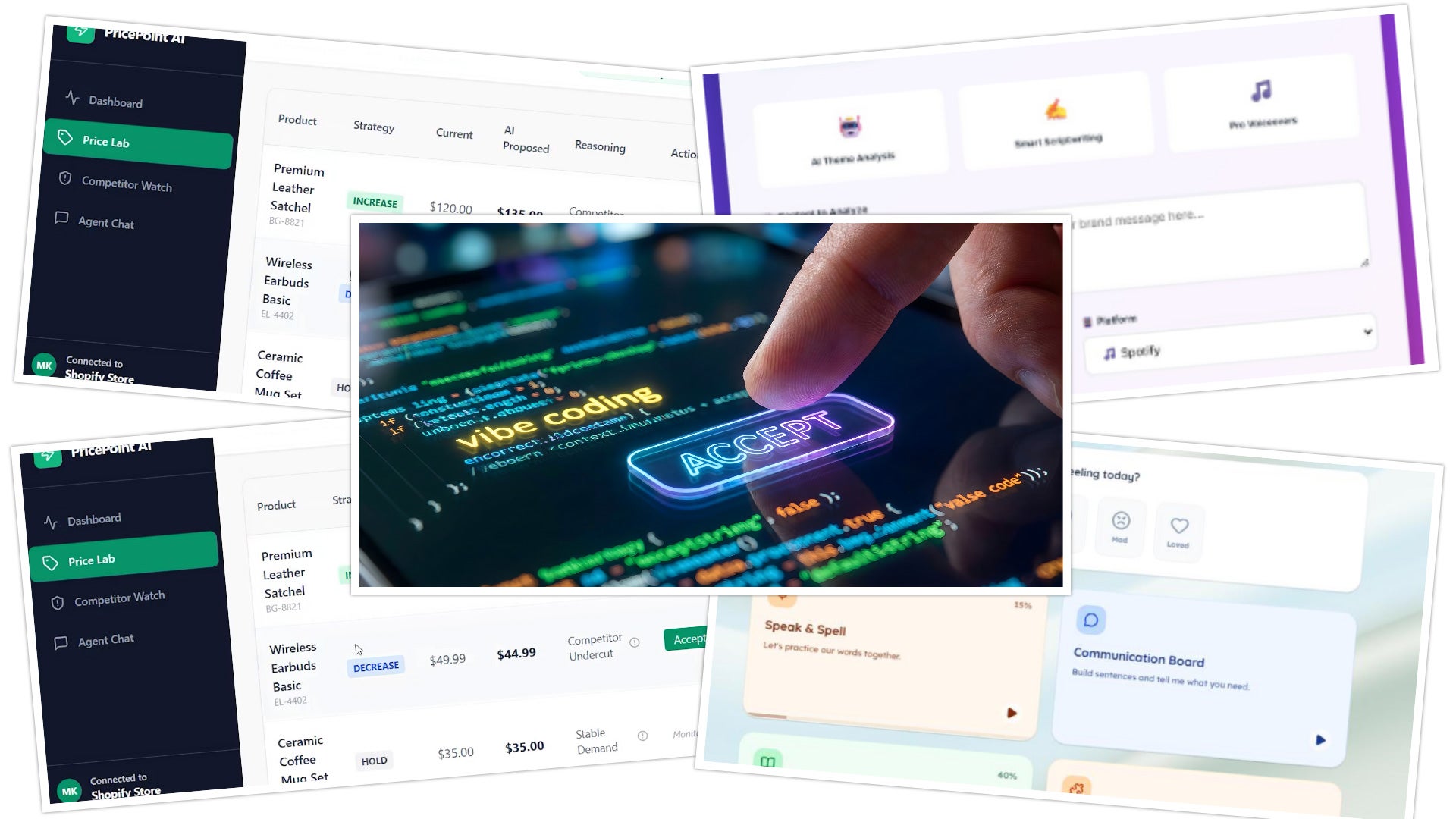
Learning to code has long carried an aura of difficulty—hours spent memorizing syntax, tracking down tiny errors and struggling to produce a working project.
A shift began gaining momentum in early 2025, when computer scientist Andrej Karpathy popularized the term “vibe coding.” This AI-assisted style of app creation enables developers to guide intelligent coding tools with natural language prompts. Instead of writing every line manually, users focus on high-level goals, creative direction and problem-solving while the AI handles much of the technical execution.
Business schools have begun incorporating vibe coding—or closely related AI-assisted coding concepts—into MBA curricula. And the University of Maryland’s Robert H. Smith School of Business is among the early movers.
In fall 2025, Dean’s Professor of Marketing Wendy Moe focused her course, Marketing in the Age of AI, on vibe coding. Her students used AI-powered tools such as Replit and others to generate, refine and debug code for fully functioning applications.
“Vibe coding is a ‘no-code’ approach that uses large language models to build software applications,” Moe says. “Every student in my class used vibe coding to build an app for their final project.
These projects, she adds, showcase creativity and real-world potential and reflect the range of ideas emerging from the course. The projects included:
- BrandVoiceAI (Ajith Iyer): A B2B SaaS tool that enables marketers to create professional audio ads from a simple brand description in under two minutes—no agencies or audio expertise required. (Live demo)
- PricePointAI (Aniket Shah): A pricing intelligence app that scans the internet for comparable products and recommends optimal pricing for small businesses.
- SmartStartPro (Pranav Kumaraswamy): A tool designed to help international students prepare for their arrival in the United States, from logistics to essential resources.
- NeuroEngageAI (Oluwafemi Elias): An adaptive learning platform that uses AI, immersive storytelling, and real-time engagement signals to support neurodivergent children in building communication and life skills.
- Schedule Anyone Anywhere Anytime, SAAA (Luke Aaron): A scheduling and communication platform to help general contractors coordinate with subcontractors on building projects.
Moe notes that several of the apps are close to launch-ready—especially PricePointAI, SmartStartPro and BrandVoiceAI.
Regarding the latter, Iyer gives insight into the creative process including its efficiency: "Even with prior coding experience, I found the 'vibe coding' approach to be a great accelerator. It allowed me to bypass boilerplate setup and focus entirely on user experience and design,” he says. “Because the AI handled the syntax, I was able to put my energy into ensuring the code remained scalable. It turned development into a creative design process rather than just pure engineering."
The rise of vibe coding comes amid broad public concern about job displacement from AI. However, vibe coding proponents point to this concept as offering a practical entry point into the digital economy.
“Vibe coding basically allows everyone—whether or not they possess coding skills—to build software applications,” Moe says. “This makes software development more accessible to more people and will allow individuals and organizations who do not have the resources for expensive software developers to build.”
“The lesson I teach in my class is that if AI can allow everyone to build, then it becomes critical for them to be able to think strategically about how to design and market their products,” she adds. “This is the focus of my course... thinking strategically about the consumer, the product and marketing while using AI to execute and implement.”
Media Contact
Greg Muraski
Media Relations Manager
301-405-5283
301-892-0973 Mobile
gmuraski@umd.edu
About the University of Maryland's Robert H. Smith School of Business
The Robert H. Smith School of Business is an internationally recognized leader in business education and cutting-edge research. The school’s world-class faculty facilitate experiential learning opportunities rooted in the real world. Smith students learn to think like entrepreneurs, prepared to drive positive impact. The school offers undergraduate, online and on-campus business master's, full-time, part-time, online and executive MBA, plus PhD and DBA degree programs, and non-degree and executive education programs. Where Smith leads, the future follows.