
College students today face a job market that has become increasingly competitive, disrupted by technological change and displaying slowing hiring rates. However, new data shows that students apprehensive about the prospects of differentiating themselves may find their path forward through global experiences.
The Center for Global Business at the University of Maryland’s Robert H. Smith School of Business is sharing findings from several reports detailing the potential impact of study abroad programs on students’ career outcomes, such as faster job acquisition and higher starting base salary, as well as the growing emphasis on international expertise by employers.
The findings are gathered from sources at national, regional and institutional levels. Examples include survey results from the Forum on Education Abroad and a review of UMD study abroad participation rates. They are also drawn from a forthcoming paper co-authored by Smith’s Kislaya Prasad for the Centers for International Business Education and Research (CIBERs), and a CGB analysis of several years of internal Smith School study abroad program data assessing correlations between study abroad participation and career impact.
Rebecca Bellinger, executive director of the Center for Global Business, believes the findings further demonstrate the importance of the center’s work, particularly in equipping students with international skills and building cross-cultural expertise.
“There’s an appetite for global experiential learning and understanding how the rest of the world does business,” says Bellinger. “Our students are studying abroad in large numbers because they believe that global experience matters. Our work at CGB matters for student learning, but more importantly, for their career trajectories and self-development.”
It's CGB’s investment in global experiential education that has helped propel the Smith School as the largest sender of study abroad participants at UMD. Through the center, undergraduate and graduate students alike can participate in study abroad programs, both short- and long-term, and gain internships and opportunities in global consulting.
Building a global mindset doesn’t necessarily require traveling abroad, either. Through CGB, students can deepen their understanding of global business challenges by attending events, such as the Distinguished Speakers in International Business series, workshops, career treks, and case competitions.
“Study abroad opportunities and programs are not a one-size-fits-all. We curate a portfolio for students so they can study abroad in whatever best matches their career trajectory and academic program,” says Bellinger. “That's really what it’s about, trying to encourage and support students so they have the most options for their future.”
Below are four findings from recent reports showing how students can benefit from incorporating study abroad elements into their educational experience:
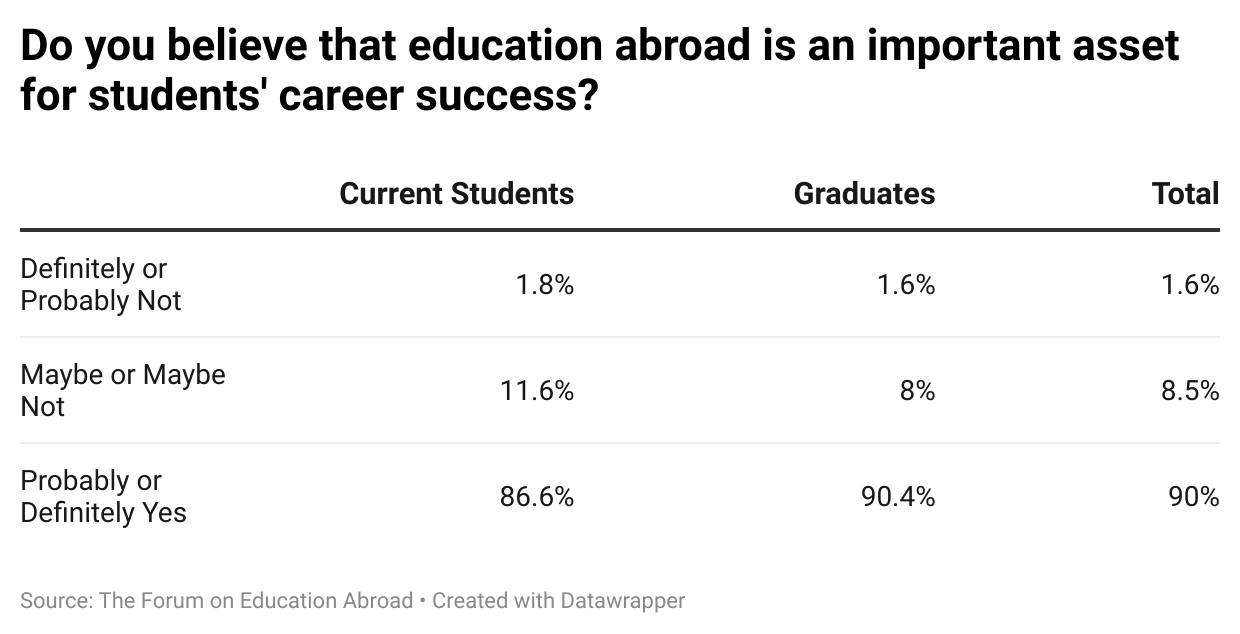
Figure 1: Conducting the largest known career-focused survey of education abroad, the Forum on Education Abroad garnered more than 8,000 responses from alumni with study abroad experience who overwhelmingly believe that global education experiences contribute to career success.
The report, which aims to leverage study abroad opportunities “to fill current gaps in our workforce and meet future challenges,” provided a breakdown of this sentiment by respondent industries. The highest percentages of survey respondents who place a high value on study abroad experiences identified themselves as entrepreneurs, educators and sports and recreation professionals.
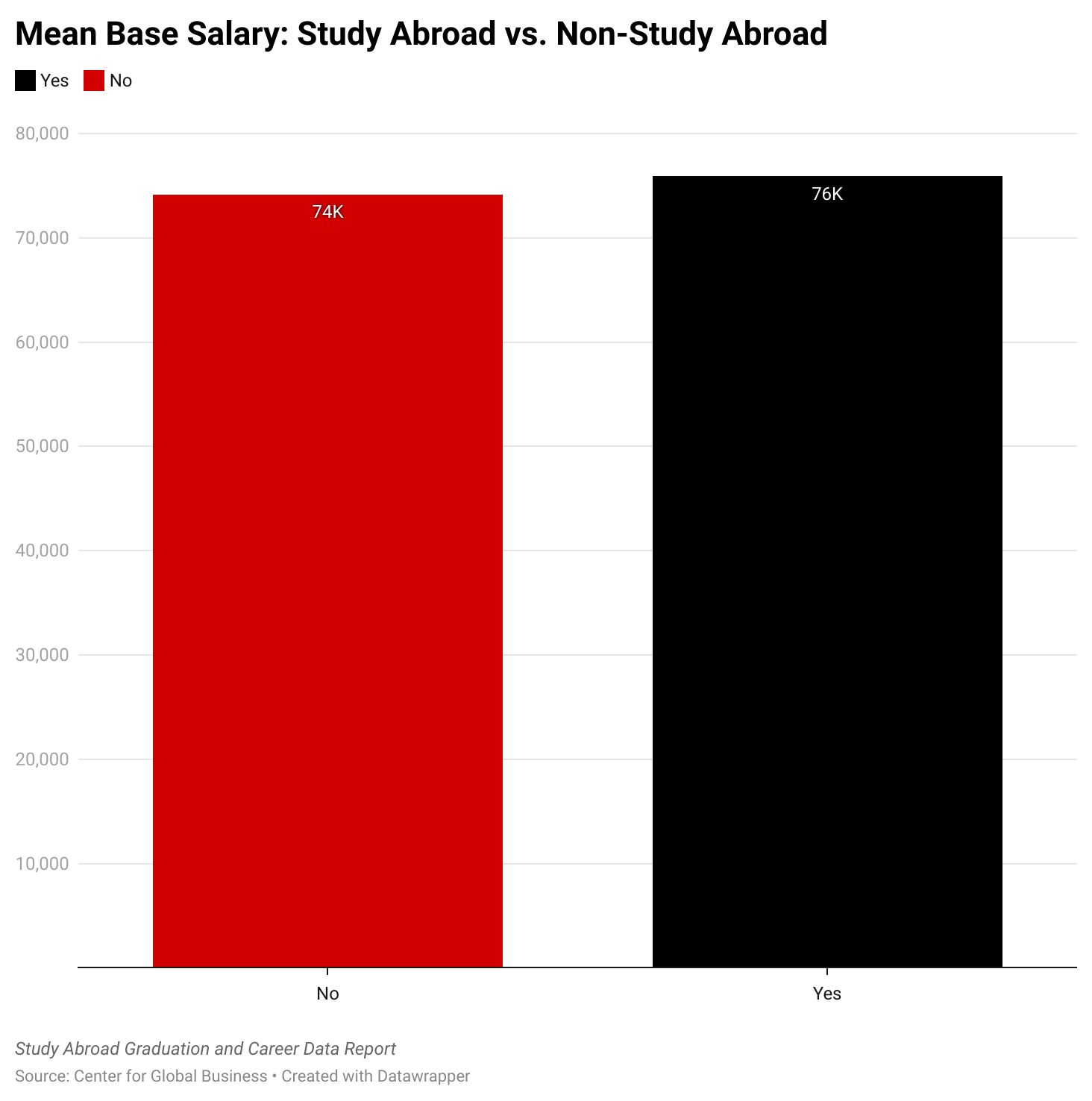
Figure 2: Reviewing data sources such as internal study abroad program data between 2019 and 2025, and career outcomes for all business graduates courtesy of Smith’s Office of Career Services, CGB analyzed the base salaries of nearly 2,000 Smith graduates to compare outcomes for those who studied abroad versus those who didn’t.
Students who participated in education abroad reported a slightly higher base salary ($75,912) at their first job out of college than those who did not ($74,147.5) — a 2.37% difference. The findings further support the notion that global business skills are in demand and that employers are willing to provide, on average, higher compensation to those who possess them.
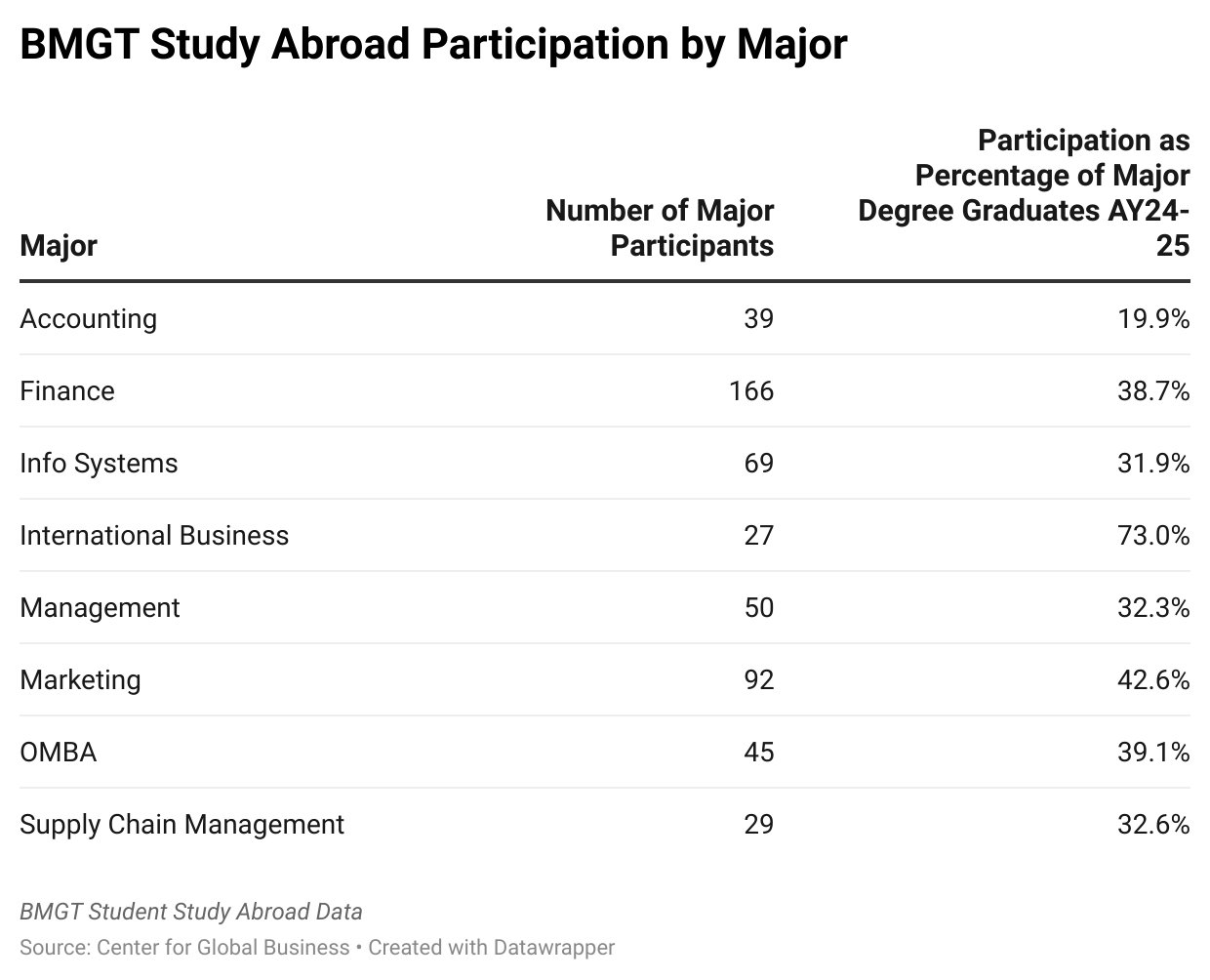
Figure 3: Demonstrated in the Smith School’s strategic plan is the idea that business education is “Everyone’s Business.” The same applies to its study abroad programs, which predominantly saw participation rates among majors range from 30 to 40% among degree graduates during the 2024-2025 academic year.
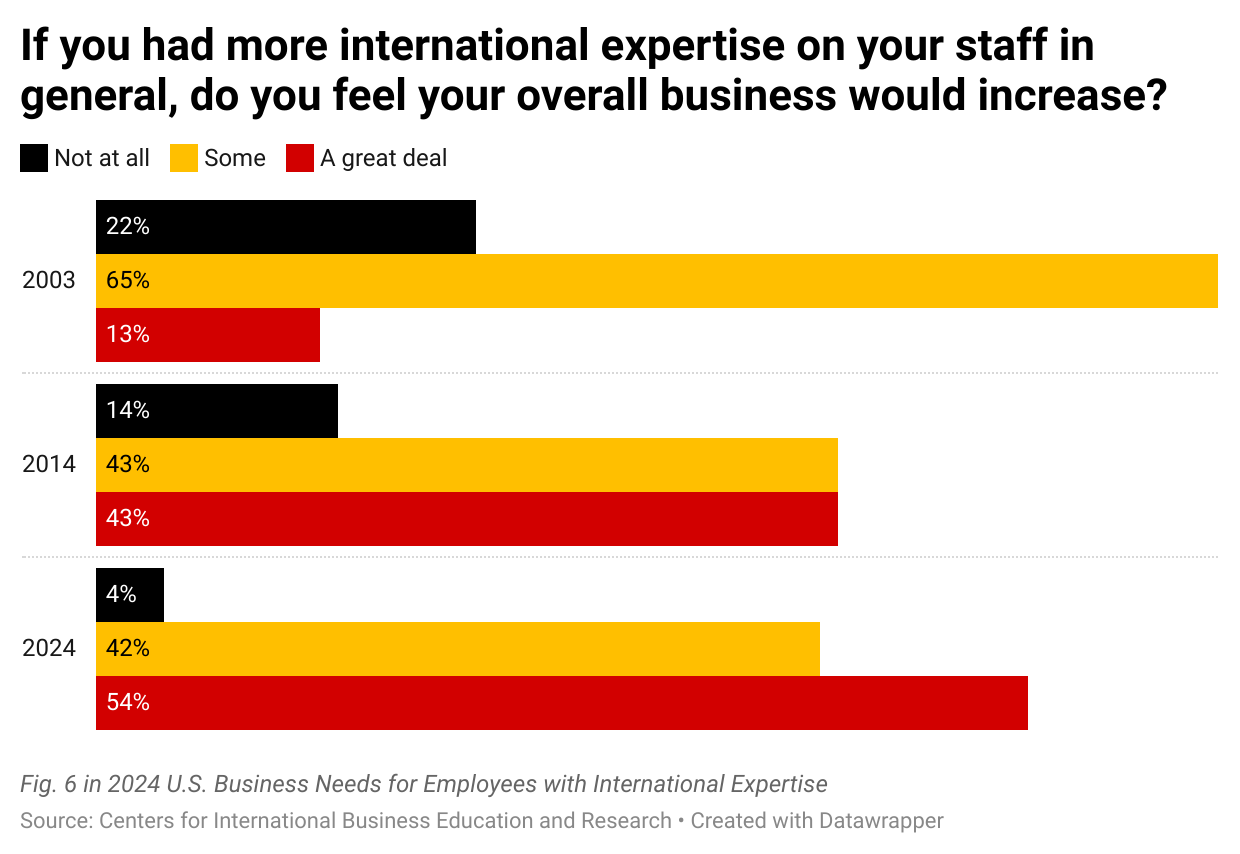
Figure 4: Prasad and University of Washington professor Debra Glassman collaborated to produce the 2024 U.S. Business Needs for Employees with International Expertise survey, the third of its kind conducted by CIBERs.
This edition of the survey recorded 1,217 responses from businesses of varying sizes across an array of industries, all of which engage in international business to some extent. Over three decades, firms have continued to place a greater priority on international business, while also increasing demand for employees with global competence.
According to the report, among the most critical global business skills in demand from employers were understanding local markets and business practices, familiarity with legal and government requirements and the ability to work with cross-cultural differences.
Media Contact
Greg Muraski
Media Relations Manager
301-405-5283
301-892-0973 Mobile
gmuraski@umd.edu
About the University of Maryland's Robert H. Smith School of Business
The Robert H. Smith School of Business is an internationally recognized leader in management education and research. One of 12 colleges and schools at the University of Maryland, College Park, the Smith School offers undergraduate, full-time and flex MBA, executive MBA, online MBA, business master’s, PhD and executive education programs, as well as outreach services to the corporate community. The school offers its degree, custom and certification programs in learning locations in North America and Asia.