
Yi Xu Directory Page

Yi Xu
Professor of Operations Management
Ph.D., The Wharton School, University of Pennsylvania
Yi Xu is Professor of Operations Management at the Robert H. Smith School of Business at the University of Maryland. He received his Ph.D. in Operations Management from The Wharton School, University of Pennsylvania. His research interests are in online platform operations, sharing economy, pricing, and innovation management. His research articles have appeared in Management Science, Marketing Science,Production and Operations Management, and Manufacturing and Service Operations Management, among others. He is a Senior Editor of Production and Operations Management. Professor Xu teaches Operations Management, Pricing and Revenue Management, and Lean Management in the MBA, MS, EMBA and Executive Education Programs at the Smith School. He has taught for and consulted with several Fortune 500 companies, government agencies and non-profit organizations. Professor Xu has been a frequent presenter and speaker at international conferences.
Publications
- Huang, P., G. Lyu, and Y. Xu. 2021. Quality Regulation on Two-sided Platforms: Exclusion, Subsidy, and First-party Application. Management Science, Forthcoming.
- Tian, Z., H. Gurnani, and Y. Xu. 2021. Collaboration in Development of New Drugs. Production and Operations Management, 30 (11), 3943-3966.
- Nakkas, A. and Xu, Y. 2019. The Impact of Valuation Heterogeneity on Equilibrium Prices in Supply Chain Networks. Production and Operations Management, 28(2), 241-257.
- Xiao, W and Xu, Y. 2018. Should an Online Retailer Penalize its Independent Sellers for Stockout? Production and Operations Management, 27(6), 1124-1132.
- Dong, Y. K. Xu, Y. Xu and S. Wan. 2016. Quality Management in Multi-level Supply Chains with Outsourced Manufacturing. Production and Operations Management. 25(2) 290-305.
- Xiao, W. and Y. Xu. 2012. The impact of royalty contract revision in a multi-stage strategic R&D alliance. Management Science. 58(12) 2251–2271.
- Kok, G. and Y. Xu. 2011. Optimal and competitive assortments with endogenous pricing under hierarchical consumer choice models. Management Science. 57(9) 1546–1563.
- Xu, Y., H. Gurnani, and R. Desiraju. 2010. Strategic supply chain structure design for a proprietary component manufacturer. Production and Operations Management. 19(4) 371-389. [Lead article]
- Terwiesch, C. and Y. Xu. 2008. Innovation contests, open innovation, and multi-agent problem solving. Management Science. 54(9) 1529-1543. [Lead article]
- Cachon, G.P., C. Terwiesch, and Y. Xu. 2008. On the effects of consumer search and firm entry in a multiproduct competitive market. Marketing Science. 27(3) 461-473.
- Gurnani, H. and Y. Xu. 2006. Resale price maintenance contracts with retailer sales effort: Effect of flexibility and competition. Naval Research Logistics. 53(5) 448-463.
- Cachon, G.P., C. Terwiesch, and Y. Xu. 2005. Retail assortment decision in the presence of consumer search.Manufacturing & Service Operations Management. 7(4) 330-346.
- Terwiesch, C. and Y. Xu. 2004. The Copy-Exactly ramp-up strategy: Trading-off learning with process change. IEEE Transactions on Engineering Management. 51 (1) 70-84.
News
Research


Insights



Recent Research
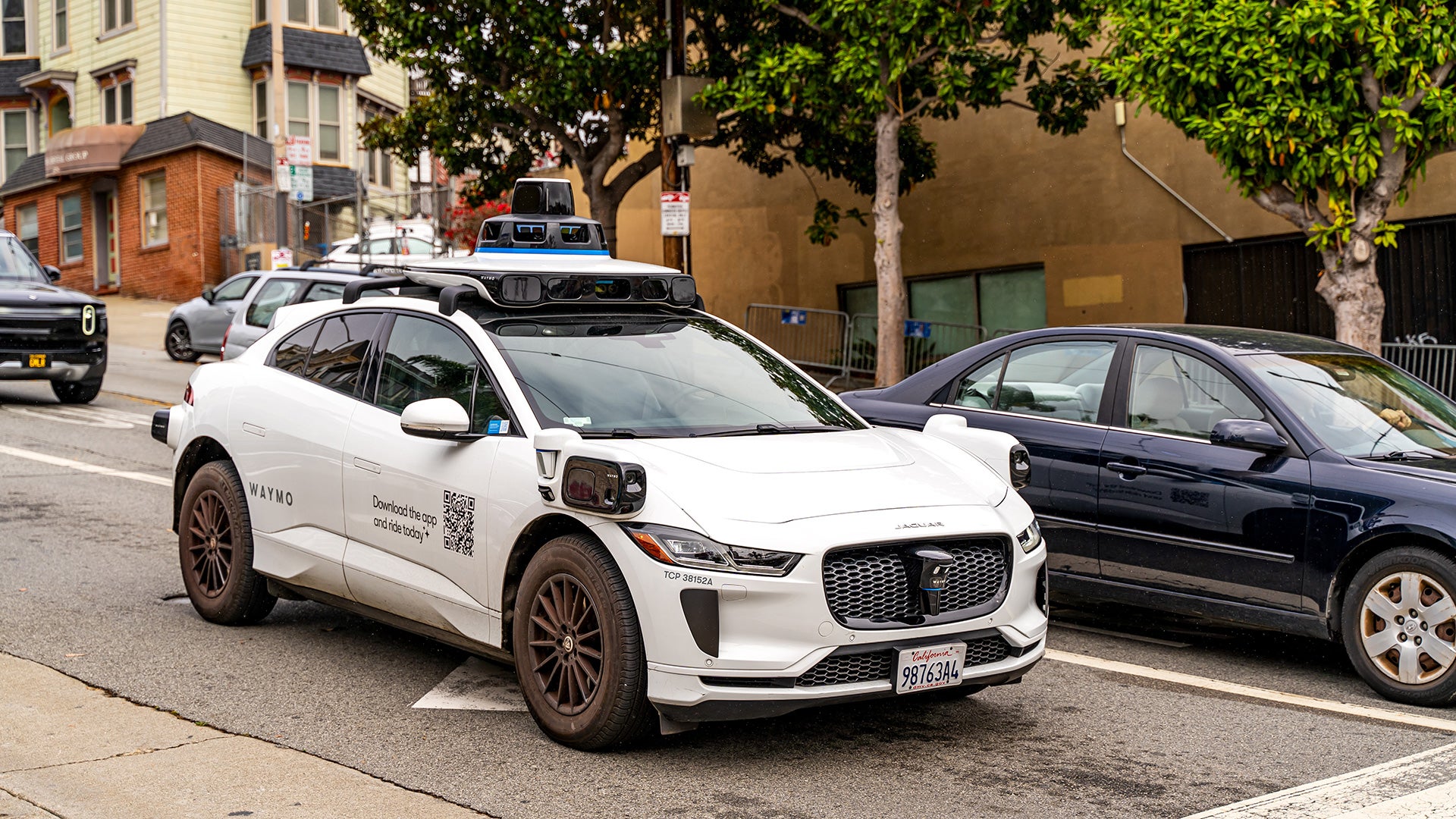
Evolution of Ride Services: From Ride- Hailing to Autonomous Vehicles
Management Science
In recent years the ride service industry has been evolving rapidly, driven by disruptive technologies such as mobile apps, AI, and autonomous vehicles (AVs). While platform-based decentralized ride hailing companies have gained significant market share, vertically-integrated robotaxi services using emerging AVs are starting to enter the market. In this paper, we aim to provide insights about the evolution and the future of ride services studying these two competing business approaches. We find that in many cases in larger markets the ride-hailing firm surprisingly gains the upper hand in competition, having higher market share and profits as well as lower service delays and higher prices, even if it has a cost disadvantage. Further, entry of the AV firm into a market with a dominant ride-hailing firm may reduce total vehicle supply and increase customer wait costs. We also find that when customers are impatient, the entry of a high cost AV firm may lead to a decrease in social welfare despite introducing competition, suggesting that regulators should be careful about introduction of robotaxi services in a market if they are not sufficiently cost efficient. From a broader perspective, our results demonstrate that platform business models in general may have significant strategic advantages over firms with traditional vertically-integrated models under competition, and platforms' dominance in a market may even result in welfare gains.
Daehoon Noh (Korea University), Tunay I. Tunca (UMD, Smith), Yi Xu (UMD, Smith)