
Tunay Tunca Directory Page

Tunay Tunca
Dean's Professor of Management Science and Operations Management
PhD, Stanford University
Tunay Tunca is the Dean’s Professor of Management Science and Operations Management at the Robert H. Smith School of Business at University of Maryland. He received his M.S. in Management Science from University of Rochester, and M.S. in Financial Mathematics and Ph.D. in Business Administration from Stanford University. Prior to joining University of Maryland, he was an Associate Professor of Operations, Information, and Technology at Stanford GSB. Professor Tunca has also been a visiting scholar at the Sloan School of Business at Massachusetts Institute of Technology, Wharton School of Business at University of Pennsylvania. His research interests are in economics of operations management, focusing on theoretical and empirical analysis of supply chains, innovative operations, sharing economy business models and the role of AI usage in human decision making. His research has won awards and recognitions from top academic journals and research organizations such as Management Science, M&SOM, iFORM, POMS, and CSAMSE. He has served as an Associate Editor for several leading academic journals, including currently for Management Science and M&SOM.
He is the winner of a number of teaching awards at the Smith School, including the Allen J. Krowe Teaching Excellence Award in 2014 and 2019; Distinguished Teaching Awards in 2015, 2016, 2017, 2018, 2019, 2020, 2023 and 2024; the Most Effective Core Professor Award from the Full Time MBA students in 2023, 2024, and 2025; and the William D. Bradford Spirit of Excellence Award from Black MBA and Latin MBA Student Associations in 2024, as well as being selected as Favorite Professor by DC MBA students.
At Smith, he served as the founder and director of the MS in Business Analytics program and the cofounder and codirector of the Smith Analytics Consortium. He has also worked in joint projects with a number of companies including DiDi Chuxing, Hewlett Packard, General Electric, JD, Taobao, Meituan, Novartis AG, and Yahoo Inc. His work has been featured or quoted in various media outlets including The Economist, Forbes, US News and World Report, and Investors’ Business Daily.
News
Research


Insights



Recent Research
Market Formation, Pricing, and Revenue Sharing in Ride Hailing Services
Manufacturing & Service Operations Management, September 2025
Problem definition: We empirically study the market for ride-hailing services. In particular, we explore the following questions: (i) How do the two-sided market and prices jointly form in ride-hailing marketplaces? (ii) Does surge pricing create value and for whom? How can its efficiency be improved? (iii) Can platforms' strategy on revenue sharing with drivers be improved? (iv) What is the value generated by ride-hailing services, including hosting rival taxi services on ride-hailing apps? Methodology/Results: We develop a discrete choice model for the formation of mutually dependent demand (customer side) and supply (driver side) that jointly determine pricing. Using this model and a comprehensive data set obtained from the largest mobile ride platform in China, we estimate customer and driver price elasticities and other factors that affect market participation for the company's two main markets, namely basic ride-hailing and Taxi services. Based on these estimation results and counterfactual analysis, we demonstrate that surge pricing improves customer and driver welfare as well as platform revenues, while counterintuitively reducing Taxi revenues on the platform. However, surge pricing should be avoided during non-peak hours as it can hurt both customer and platform surplus. We show that platform revenues can be improved by increasing drivers' revenue share from the current levels. Finally, we estimate that the platform's basic ride-hailing services generated customer value equivalent to 13.25 Billion USD in China in 2024, and hosting rival Taxi services on the platform boosted customer surplus by 3.6 Billion USD. Managerial Implications: Our empirical framework provides ride-hailing companies a way to estimate demand and supply functions, which can help with optimization of multiple aspects of their operations. Our findings suggest that ride-hailing platforms can improve profits by containing surge-pricing to peak hours only and boosting supply by increasing driver compensation. Finally, our results demonstrate that restricting ride-hailing services create significant welfare losses while including taxi services on ride-hail platforms generate substantial economic value
Liu Ming, Tunay I. Tunca, Yi Xu, and Weiming Zhu
Evolution of Ride Services: From Ride- Hailing to Autonomous Vehicles
Management Science
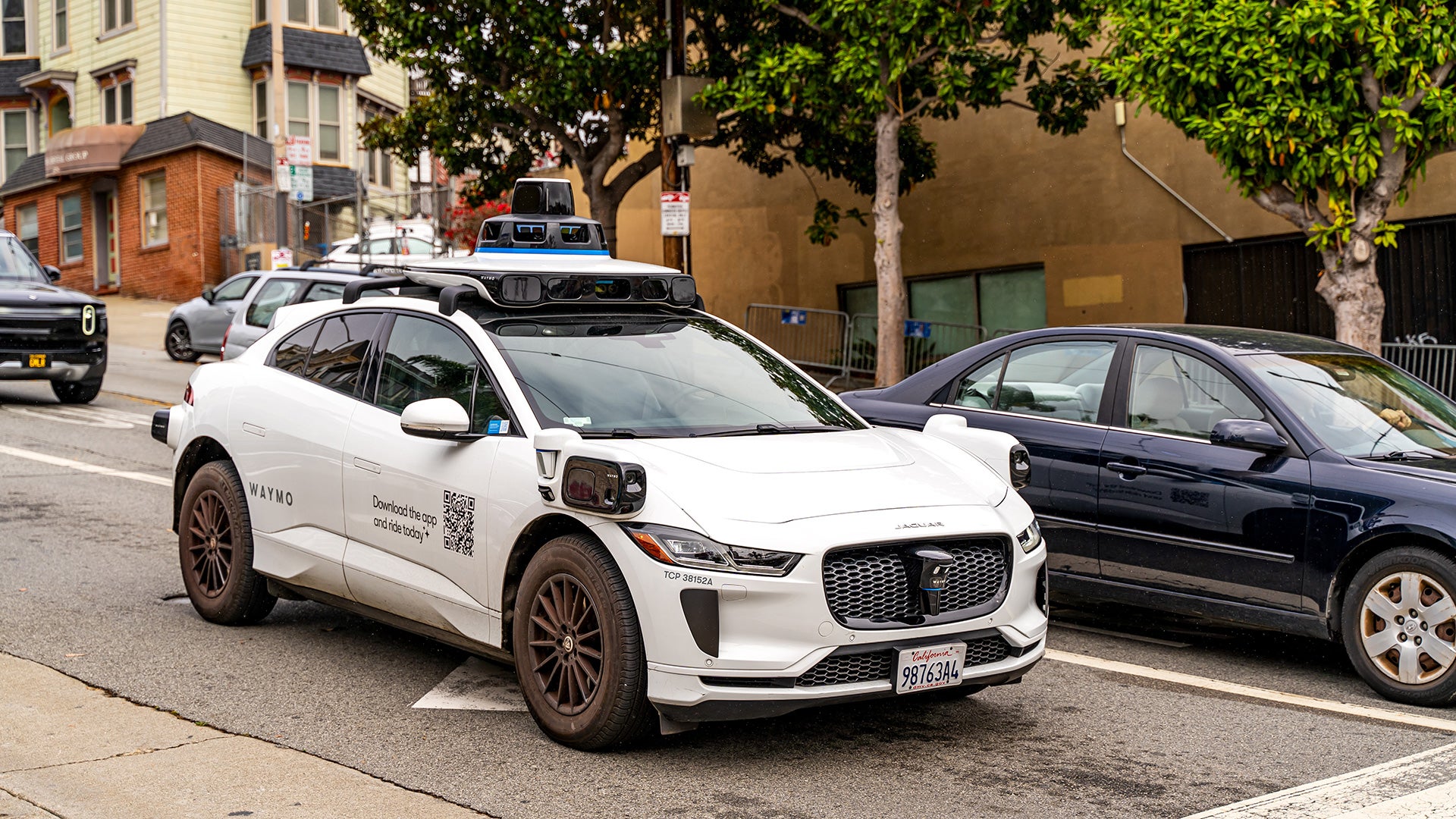
In recent years the ride service industry has been evolving rapidly, driven by disruptive technologies such as mobile apps, AI, and autonomous vehicles (AVs). While platform-based decentralized ride hailing companies have gained significant market share, vertically-integrated robotaxi services using emerging AVs are starting to enter the market. In this paper, we aim to provide insights about the evolution and the future of ride services studying these two competing business approaches. We find that in many cases in larger markets the ride-hailing firm surprisingly gains the upper hand in competition, having higher market share and profits as well as lower service delays and higher prices, even if it has a cost disadvantage. Further, entry of the AV firm into a market with a dominant ride-hailing firm may reduce total vehicle supply and increase customer wait costs. We also find that when customers are impatient, the entry of a high cost AV firm may lead to a decrease in social welfare despite introducing competition, suggesting that regulators should be careful about introduction of robotaxi services in a market if they are not sufficiently cost efficient. From a broader perspective, our results demonstrate that platform business models in general may have significant strategic advantages over firms with traditional vertically-integrated models under competition, and platforms' dominance in a market may even result in welfare gains.
Daehoon Noh (Korea University), Tunay I. Tunca (UMD, Smith), Yi Xu (UMD, Smith)