

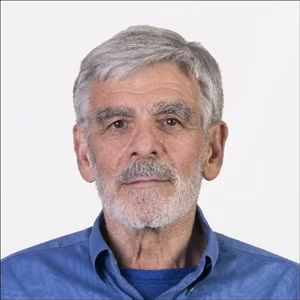
In 1986, Richard “Dick” O’Neill ’69 landed a top position at the Federal Energy Regulatory Commission, serving as technical advisor to the agency’s chair. It was a critical time to start the new job. Though the oil shocks of the 1970s had subsided, fears of another spike in energy prices loomed over Washington. And then-FERC Chair Martha O. Hesse told O’Neill she wanted the agency to adopt a new priority for energy regulation: competition.
“So I set about to do it,” O’Neill recalls.
Over the following 33 years, O’Neill would help fundamentally transform the federal government’s role in the energy sector, leading FERC’s transition away from heavy-handed regulation to a more market-driven approach. During a career at FERC that spanned the administrations of six different presidents, O’Neill was motivated not by political allegiances, but by a belief that more efficient regulation could help stabilize energy markets, lower costs to consumers, and increase profits for companies. His enduring impact on the energy sector was affirmed in 2022, when O’Neill was elected to the National Academy of Engineering for his “leadership and contributions to the liberalization and design of efficient natural gas and electric power markets.”
While at FERC, O’Neill spearheaded the agency’s efforts to require pipelines to transport the natural gas of all companies—not just the fuel that the pipelines themselves owned. He developed a process to auction off the excess transportation capacity of natural gas pipelines, and he created a way to tie the rates that oil pipelines charged customers to the industry’s operating cost, a process known as benchmark regulation. He went on to help design new transmission switching software that could deliver electricity less expensively—a project he began at FERC and continued at the Energy Department’s Advanced Research Projects Agency-Energy (ARPA-E), where he served as a distinguished senior fellow from 2019 to 2023.
In crafting federal policy, O’Neill often found himself at the center of heated disputes among his Energy Department colleagues, whose ideologies ranged from Marxism to Chicago-School conservatism. His approach was to listen to everyone, regardless of their worldview. “I borrowed from both sides of the spectrum in managing the process,” O’Neill said.
The AI revolution, O’Neill says, is already creating efficiencies in the energy industry, allowing for faster production and delivery of energy. And despite the growing backlash to AI data centers, he believes that Big Tech’s rapacious need for energy may stimulate technological breakthroughs that will enable future data centers to operate on less power.
When it comes to the future of the energy industry, O’Neill says, it’s the unexpected innovations that will prove most decisive. Just look, for example, at how fracking technology revolutionized the natural gas market. And while AI tools will have a critical role to play, O’Neill says it will be human judgment, not machine power, that will unlock the breakthroughs of tomorrow.
“AI operates on the information that’s available to it, and innovations—breakthroughs—aren’t in those data sets,” he says. “So if we want to innovate, we need people who are using AI but are thinking outside of the box.”
Media Contact
Greg Muraski
Media Relations Manager
301-405-5283
301-892-0973 Mobile
gmuraski@umd.edu
About the University of Maryland's Robert H. Smith School of Business
The Robert H. Smith School of Business is an internationally recognized leader in business education and cutting-edge research. The school’s world-class faculty facilitate experiential learning opportunities rooted in the real world. Smith students learn to think like entrepreneurs, prepared to drive positive impact. The school offers undergraduate, online and on-campus business master's, full-time, part-time, online and executive MBA, plus PhD and DBA degree programs, and non-degree and executive education programs. Where Smith leads, the future follows.