
PhD Program
PhD Program
Shaping the Future of Business Scholarship
In an international economy driven by accelerating change, the business world needs cutting-edge scholarship that probes the complexity of the marketplace and gives practitioners, policymakers and thinkers evidence-based tools and strategies to transform our models for managing, leading, innovating and succeeding.
PhD Programs for Aspiring Thought Leaders
The Robert H. Smith School of Business PhD program is designed for individuals who wish to become thought leaders and business faculty at elite research institutions worldwide. Students benefit from a diverse, world-class experience, and collaborate with faculty on relevant, groundbreaking research long after graduation. Our faculty supports PhD students with extensive mentorship and collaboration, including pursuing the publication of papers in top business journals. Doctoral alumni also generously contribute to our research enterprise as they often co-author publications, present at our speaker series and show their support at major conferences. If you aspire to this kind of collective contribution to the discovery and dissemination of business knowledge, Smith is a wonderful place to further your career in academia.
Credits
54 Credits
Program Duration
5 Years
Application Window
Aug.–Dec. 19
Prerequisites
GMAT/GRE
Areas of Specialization
The Smith PhD Program is known for high-quality research led by our internationally acclaimed faculty. The program is intellectually stimulating, uniquely collaborative, and research-intensive. The Smith PhD Program offers seven areas of specialization across five academic departments. To learn more about the research and how our expertise can align with your research interests, explore the areas of specialization we offer:
Program Benefits
Funding
Every student admitted to the PhD program typically receives full financial support in the form of a graduate assistantship or fellowship for all five years, pending satisfactory progress. Each student also receives a research stipend per year that may be used for research-related expenses such as conference attendance. The research stipend depends on satisfactory progress in the program.
Facilities
Each student is provided with a carrel and computer in the PhD program suite, funded by alumnus William A. Longbrake, PhD '76. In the suite, students have access to team conference areas and study rooms to encourage collaboration and community.
Faculty-Colleague Relationship
A close working relationship between faculty and PhD students is a hallmark of the program.
Recognizable Research
Students regularly present papers at national as well as regional conferences and have papers accented in major academic journals.
Fellowships and Gifts
The Smith PhD Program draws its support from many generous gifts given by distinguished alums and scholars alike. These transformative gifts allow our PhD candidates to receive the well-rounded, involved education that makes Smith PhDs so sought-after in both industry and academia.
Long Jiang Endowed Graduate Fellowship in Business
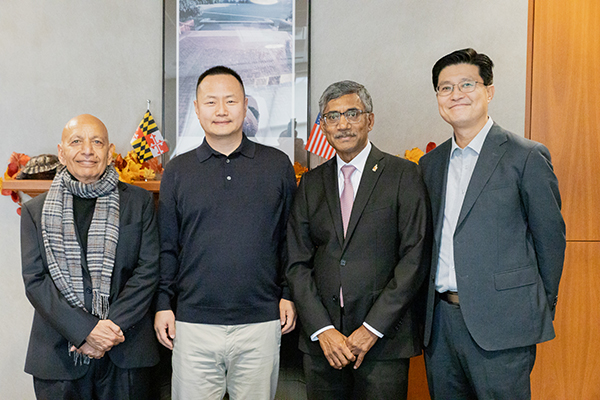 This endowed fellowship is one of four gifts provided by Long Jiang, PhD ’06, in support of faculty and doctoral students collaborative business-related research and thought leadership at the Smith School. Jiang’s gift is the largest in the history of the Smith PhD Program.
As an accomplished business leader in both the U.S. and China, Jiang founded and served in various roles with Goertek, Inc., which develops and manufactures audio equipment, smart devices using virtual and augmented reality, wireless equipment and optical components for notable clients such as Apple, Samsung, Sony, Lenovo, and Meta.
Long Jiang Graduate Student Fellowship
Established through the generous support of Dr. Long Jiang (PhD ’06, CEO of Goertek), this fellowship recognizes outstanding Smith doctoral students who demonstrate strong scholarship, rigorous thinking, and the potential for innovative and impactful research.
Recipients list this prestigious fellowship on their CVs in lieu of the standard PhD funding (~$50K), in addition to receiving a $1K account supplement.
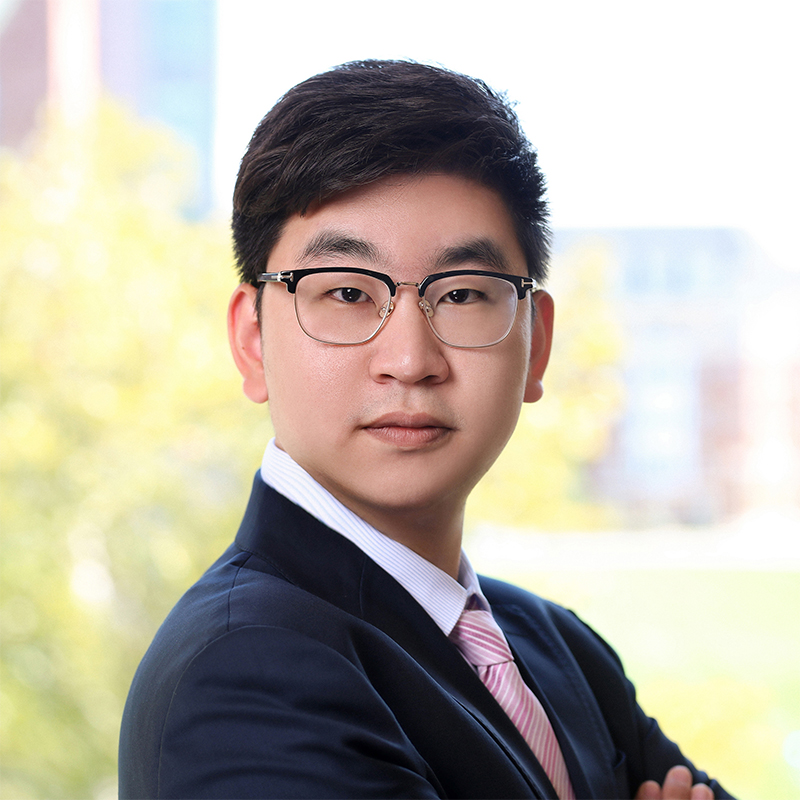
6 Fellows recognized across 3 years | Strong placements at Wharton and Penn State
2024
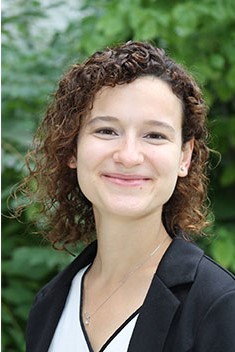
Beril Yalcinkaya
Strategy & Entrepreneurship
Wharton School (Postdoc)
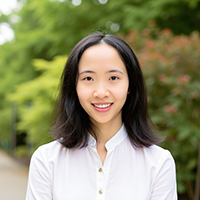
Jingwen Yang
Accounting & Information Assurance
Penn State (Assistant Professor)
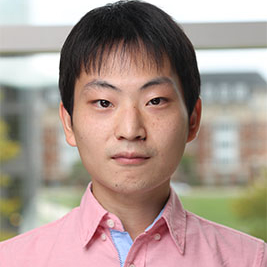
2026
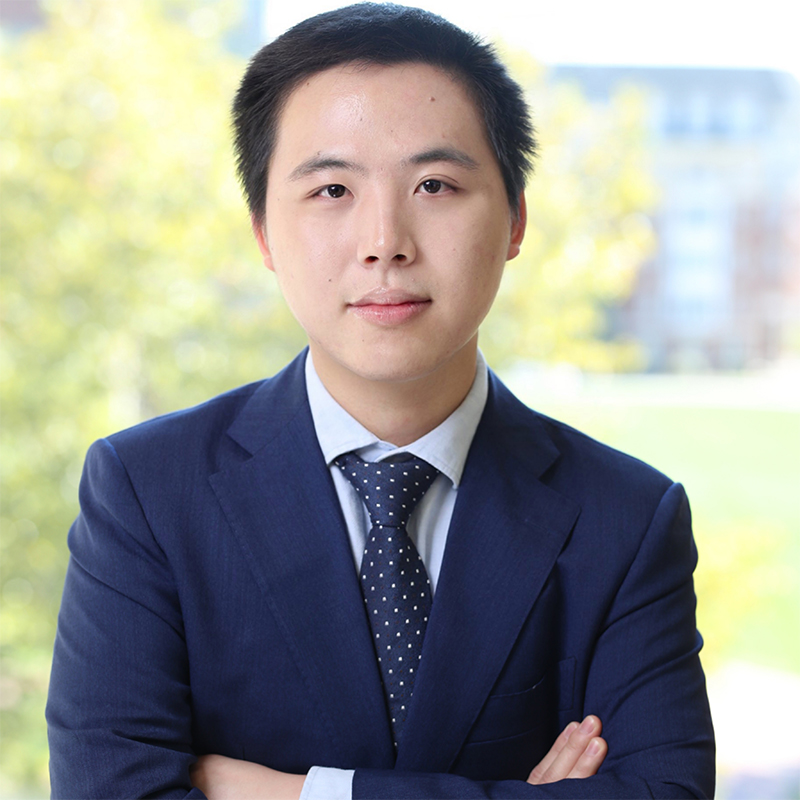
Decision, Operations & Information Technologies

Accounting & Information Assurance
Ritu Agarwal Distinguished PhD Fellowship
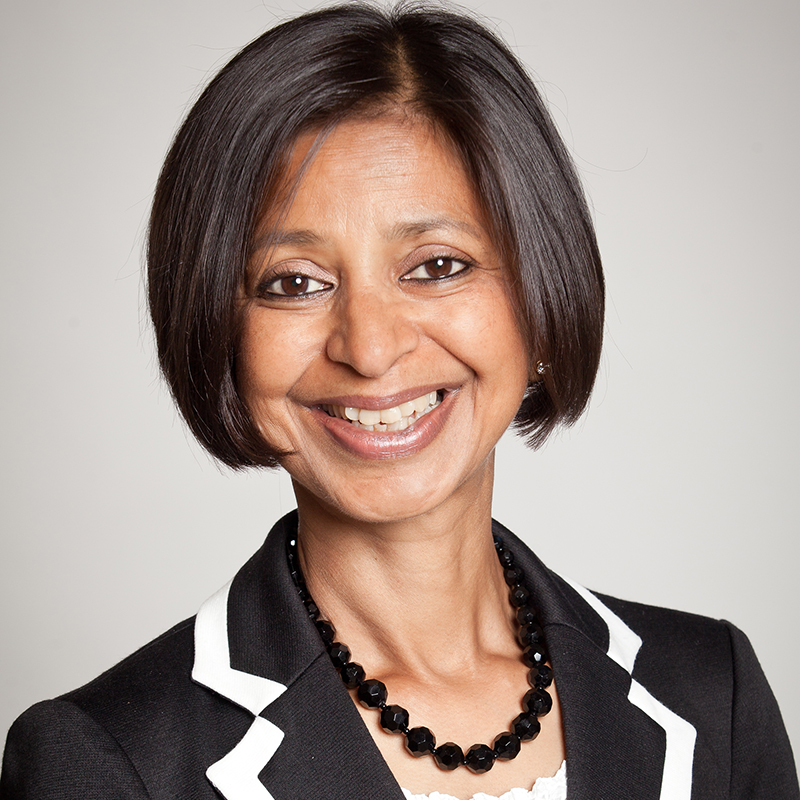 Providing financial support for doctoral students studying in the Information Systems (“IS”) area of specialization, these funds are used by the IS faculty for outstanding IS doctoral applicants and doctoral students. This award was established by former Interim Dean Ritu Agarwal, PhD, in celebration of her 23 years of exceptional contributions to teaching and research at the Smith School.
Agarwal brought significant contributions to the Smith School, and specifically the PhD Program, in her various roles: distinguished teacher-scholar, distinguished university professor, founding director of the Center for Health Information and Decision Systems (CHIDS), senior associate dean of faculty and research, and interim dean. She currently serves as the Wm. Polk Carey Distinguished Professor in Information Systems and Health at the Johns Hopkins Carey Business School, and co-founder of the Center for Digital Health and Artificial Intelligence.
Michael Ball Endowed PhD Fellowship
 This fellowship is meant to provide financial support for doctoral students studying in the Operations Management/Management Science area of specialization at the Smith School. This award is named for Michael O. Ball, PhD, Professor Emeritus at the Smith School.
Ball began his academic career as an assistant professor in 1984 and served in various administrative roles at the Smith School, including senior associate dean and associate dean for research. Additionally, Ball held joint appointments with the Institute for Systems Research at the University of Maryland, College Park. External to UMD, Ball was co-founder of Distinct Management Consultants and its subsidiary Routesmart Technologies.
Other Financial Awards
- Gerald and Deana Stempler Award for Leadership and Management
- Story Phillips Scholarships
- Abraham Golub Dissertation Proposal Memorial Award
- H. Kent Baker Graduate Fund
- Nancy S. and Edward F. Ebert Graduate Award in Free Enterprise
Latest News
New research highlights emerging bias in AI-to-AI interactions—and practical fixes
The Robert H. Smith School of Business
University of Maryland
3330 Van Munching Hall
College Park, MD 20742-1815
Phone: 301-405-2214
Email: smithphd@umd.edu
Hours of operation:
8:30 a.m. to 5 p.m. (Monday-Friday)